RFID Tags in Hazardous Areas

RFID Tags in Hazardous Areas: What You Need to Know

Learn how RFID tags are used in hazardous areas, including compliance considerations, traceability benefits, and what to evaluate when implementing RFID for Ex inspections and maintenance.
Picture of SafeEx Team

SafeEx Team

Key Insights

RFID tags improve traceability and control in hazardous areas

RFID tags make it easier to identify, track, and manage Ex equipment across its lifecycle, supporting accurate inspections, maintenance, and documentation.

RFID use in hazardous areas requires certified and compliant components

Tags, readers, and associated devices must be suitable for hazardous environments and aligned with Ex and ATEX requirements to avoid introducing new risks.

RFID supports more efficient and reliable Ex inspections

By linking physical assets to digital records, RFID reduces manual errors, improves data quality, and helps ensure inspection data is consistently captured and accessible.

Managing equipment and inspections in hazardous areas requires accurate identification, traceability, and reliable documentation.
Traditional methods such as manual labelling and paper-based records can make it difficult to maintain control over Ex equipment throughout its lifecycle. RFID tags are increasingly used to support digital inspection and maintenance workflows, but their use in hazardous areas requires careful consideration of compliance, safety, and implementation requirements.
Not all RFID tags are created equal. The following sections explore the advantages of RFID tags and the importance of selecting the right solution for hazardous area use.

Why RFID tags?

While QR codes and traditional tagging methods have their place, RFID tags offer significant advantages over QR codes and especially no identifier, in hazardous areas and harsh environments:

Reduced identification errors: Precisely identify equipment with RFID tags, eliminating the risk of mistakenly inspecting or servicing the wrong asset, especially in areas with densely packed or similar-looking equipment.

Faster inspections: Quickly scan RFID tags to access equipment information, enabling rapid inspection completion and minimising downtime.
Uninterrupted readability: Unlike QR codes that require a clean line of sight, RFID tags can be read even if they are dirty, covered in paint, or partially obscured. This ensures consistent performance and reliable data collection even in challenging industrial environments.

The SafeEx approach to RFID tag design

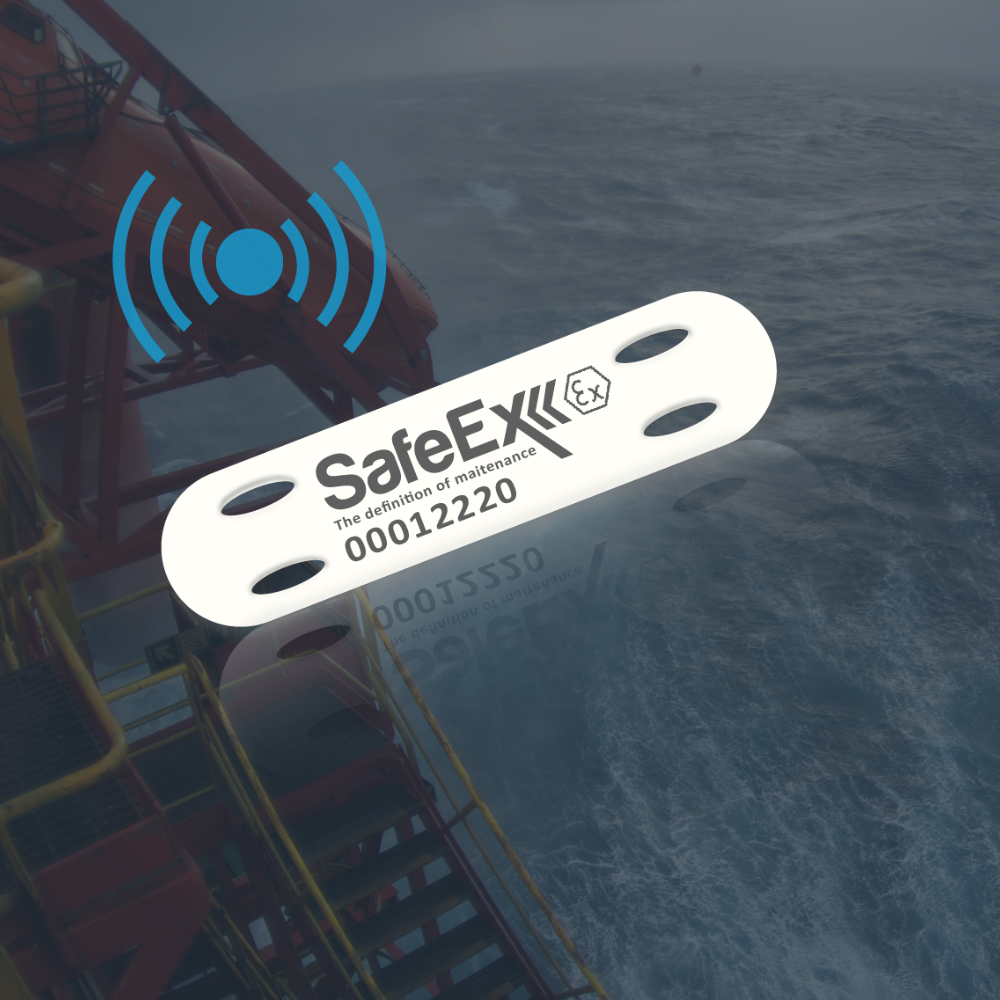
We have designed our RFID tags based on many years of experience in the field of hazardous area inspections and equipment maintenance in general.

The housing of our Ex approved RFID tags are designed to withstand harsh conditions, including exposure to various chemicals, temperature fluctuations, physical impact, and UV-radiation, ensuring long-term reliability in demanding Ex environments.
The particular chip and antenna used in our tags, was selected for its compatibility with NFC (Near Field Communication) scanners, as such scanners are built into most modern smartphones and tablets, making it ideal for this application.
This type of RFID tag is also commonly referred to as an NFC tag.

Cable tie mounting RFID or adhesive mounting RFID

Both of our in-house designed tags are compliant with the requirements of simple apparatus, making them suitable for Zone 1 and Zone 2 applications according to the IEC 60079-14 standard:

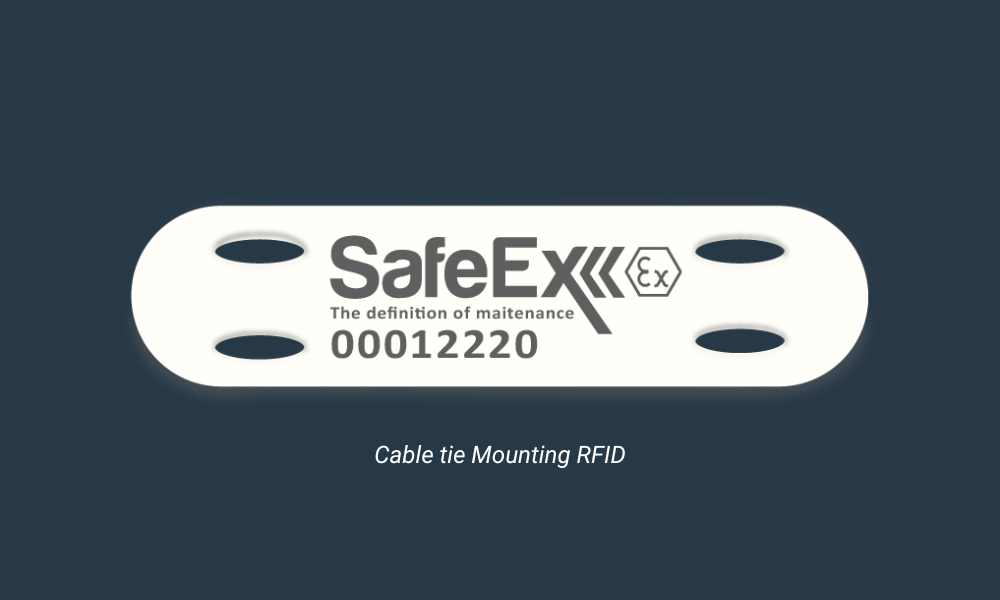
Cable Tie Mounting

Our ATEX and IECEx certified tag offers a secure and convenient method for attaching to cables, ensuring easy access for NFC tag readers. This design is ideal for environments where space is limited or where tags may be exposed to potential damage.

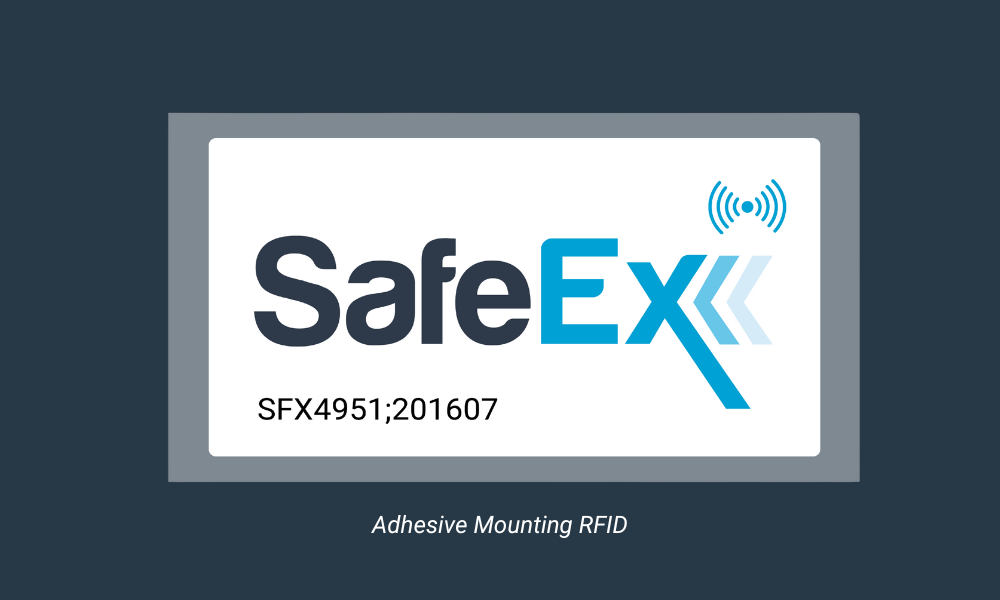
Adhesive Mounting

Our adhesive tag provides flexibility for mounting on various surfaces, including metal, where cable tags are less suitable or not desired for the aesthetics.

We understand that every operation has unique requirements. That is why SafeEx offers a range of RFID tagging solutions for Ex environments, including options for extra chemical resistance and extreme temperatures.

Beyond the RFID tag: A digital solution for Ex inspections

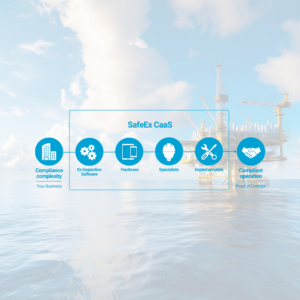
While the right RFID tags are crucial for efficient data collection, they are only one part of the equation. To truly optimise your Ex equipment maintenance and ensure compliance, you need a robust digital solution for Ex inspections.

SafeEx Cloud, our Ex asset management software, empowers you to:

Streamline inspections

Plan, schedule, and execute ATEX equipment inspections and IECEx equipment inspections with ease.

Centralise data

Manage all your Ex inspection data in one secure location, accessible anytime, anywhere.

Generate insightful reports

Track key performance indicators, identify trends, and make data-driven decisions to improve Ex equipment integrity management.

Ensure compliance

Maintain accurate records and generate reports to meet regulatory requirements for compliance audits for hazardous areas with ease.

Embrace the future

Leverage advanced algorithms for predictive maintenance in hazardous environments and intelligent Ex equipment life-cycle management.

Improve your safety and compliance

SafeEx RFID tags are designed to support reliable identification and traceability of Ex equipment in hazardous areas. By linking physical assets to accurate digital records, they help improve inspection consistency, reduce manual errors, and support compliance across the equipment lifecycle.

Frequently Asked Questions

Yes, RFID tags can be used in hazardous areas if they are specifically designed, tested, and certified for Ex or ATEX environments. Using non-certified tags can introduce safety and compliance risks.

RFID tags improve equipment identification, traceability, and inspection accuracy. They help link physical assets to digital records, reducing manual errors and supporting consistent inspection and maintenance workflows.

Key considerations include Ex certification, durability, compatibility with inspection systems, and suitability for the environmental conditions where the tags will be installed.

Picture of SafeEx Team

SafeEx Team

The SafeEx Team write about company news.

Table of Contents

Book a Demo

Configure your requirements and we will prepare a customised solution proposal.

Estimated number of inspectable items
Select the approximate size of your Ex asset database.
This helps us scope system performance, inspection effort, and implementation approach.
(Minimum: 1,000 items · Increment: 500)
RFID tags required
Select the RFID tag types relevant to your operating environment.
Learn more about our ATEX & IECEx certified RFID tags.
Intrinsically safe mobile devices
Select the devices required for inspection and maintenance work in hazardous areas.
Explore our Ex-certified mobile devices.

Need an Ex specialist to manage your compliance?
Beyond the software, our Ex experts take responsibility for your implementation and help optimize your inspection workflows. Learn more about SafeEx Cloud.

We handle the administrative and compliance burden to keep you audit-ready, so your team can stay focused on daily operations. Discover how SafeEx CaaS supports your compliance journey.


Provide your contact information
We will use this information to follow up and provide the requested details.
Additional information (optional)
Select your expected timeline and budget range.
By agreeing, I allow SafeEx to contact me regarding products and services.
I know I can unsuscribe anytime. See our Privacy Policy